Everyone in the Room Nodded. Nobody in the Room Would Buy It.
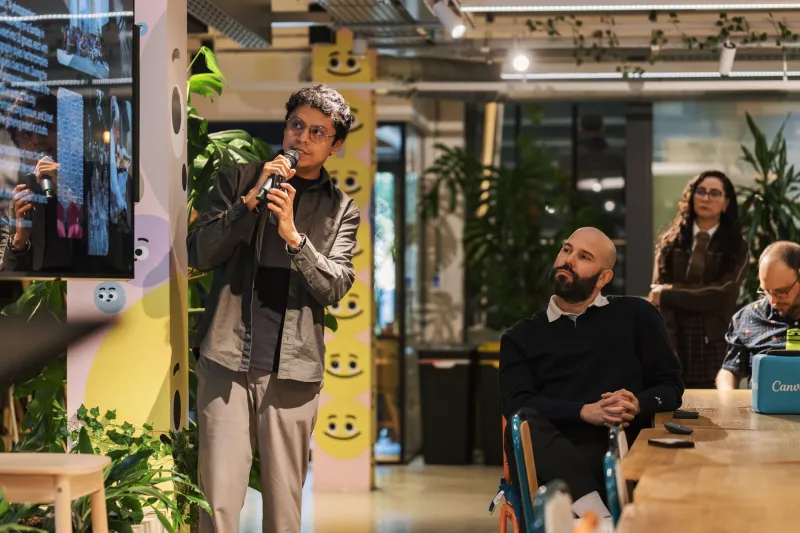
Picture the scene: a Tuesday night pitch practice at your local incubator. You walk through your slides, the room nods, someone says "this is huge," and a fellow founder offers to make an intro to their angel cousin. It feels like validation. It might be the most dangerous hour of your startup's life.
Here's the uncomfortable truth about the founder community: we are the worst possible focus group. We're optimistic by nature, generous with praise, and almost never in the market for what you're building. Yet we've somehow become the primary audience early-stage founders test their ideas on.
The Greenhouse Problem
Think about how a greenhouse works. Warm, humid, protected from wind, full of other plants doing the same thing. Great for germination. Terrible for preparing something to survive outdoors.
Startup communities function the same way. You're surrounded by people who share your vocabulary, your risk tolerance, and your enthusiasm. When you pitch them, you get cross-pollination — but from the wrong species. Their feedback is shaped by their own roadmap, their own pitch deck, and their own need for reciprocal applause.
The result is what we'll call greenhouse thinking: ideas that are beautifully adapted to the incubator environment and woefully unfit for the open market. The product gets refined until it wows a room of people who will never open a credit card for it.
Five Signs You're Pitching to the Choir
Run this diagnostic honestly:
1. Your feedback loop is other founders. Count the last ten substantive conversations about your product. How many were with people who match your actual customer profile? If the answer is fewer than three, you're gardening indoors.
**2. The praise is generic. "Love this!" "So needed!" "Big market!" Real buyers ask annoying, specific questions: How does this integrate with our existing software? What happens when we hit our data cap? Who else on my team needs training?
3. Your roadmap is peer-shaped. If your feature list started growing after demo day critiques — more AI, a mobile app, a freemium tier — because founders said so, you're building for the room, not the market.
4. You can describe your user but not quote them. If you can't recite an actual sentence a potential customer said about their problem, you're working from a composite sketch drawn by people who resemble you.
5. Everyone who loves your idea wants equity, not a subscription. Investors and fellow founders get excited differently than customers do. Excitement that never converts to a purchase order is weather, not climate.
The Cross-Pollination Trap
There's a subtle version of this that's even harder to spot. Sometimes the echo chamber doesn't just inflate your confidence — it actively reshapes your idea.
A founder building scheduling software for independent plumbers gets feedback from three SaaS founders and suddenly pivots toward "vertical SaaS for the trades" — a category play that impresses accelerators but abandons the specific, unglamorous problem that made the idea work in the first place. The plumbers didn't leave the room. The founder did.
Communities reward legibility. A pitch that sounds like other successful pitches gets more airtime than one that sounds weird and true. Over months of Tuesday nights, your idea sandblasts down into something smooth, familiar, and generic — polished by friction with the wrong surfaces.
The Field Plan: Getting Outside the Glass
You don't have to quit your incubator. You just need to balance the diet. Here's a four-week plan:
Week 1: The 20-Question Rule. Before you take any more peer feedback, line up 20 conversations with people who match your customer profile. Not friends, not friends of friends who "might be interested." Actual people with the actual problem. Use LinkedIn, industry Facebook groups, trade association directories, or just show up where they work.
Week 2: Ban the pitch. For these conversations, don't present. Ask. "Walk me through the last time this problem cost you money." Your job is to listen, not to defend. Record the exact phrases they use — that's your future landing page copy.
Week 3: The pre-order test. This is where greenhouse thinking usually collapses. Ask for something real: a deposit, a signed LOI, a pilot commitment, even a calendar invite for a paid onboarding call. Founders will give you applause. Buyers give you commitments. Measure the second one.
Week 4: The translation session. Bring what you learned back to your founder community — but flip the dynamic. Instead of asking "what do you think of my idea?" ask "here's what twelve plumbers told me; where do you think I'm misreading it?" Now your peers are pressure-testing field data instead of generating it. That's a use they're actually good for.
Keep the Greenhouse, Use It Right
None of this is an argument against incubators, accelerators, or founder Slack groups. They're invaluable for the things only fellow builders understand: the 2 a.m. doubt, the cap table confusion, the co-founder hard conversations. Your peer circle is a support system, not a market.
The healthiest founders we know run on a simple ratio: for every hour spent in the greenhouse, they spend an hour in the field. Every pitch practice is matched by customer calls. Every demo day is matched by a ride-along, a site visit, a support ticket read aloud.
Because here's the thing about applause: it's free. Customers, the kind who renew, are expensive — in the best way. Go find out what it costs to earn one before your idea hardens into a shape only your Tuesday night audience will love.