Tap the Neighbor's Hose: Partnership-Led Growth When Your Marketing Budget Is Zero
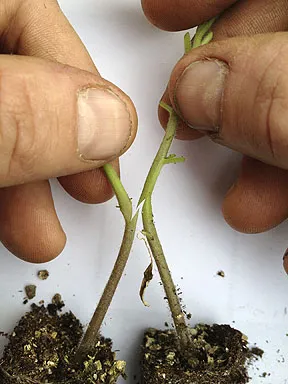
Photo: two hands grafting plant stem greenhouse close up, via www.highmowingseeds.com
Every founder eventually stares down the same wall: you've got a product people like, a pipeline that's basically you emailing strangers, and a marketing budget that rounds to zero. The instinct is to grind harder on cold outreach. The smarter move? Find someone who already has the customers you need — and give them a reason to hand you the hose.
We call it greenhouse grafting. In horticulture, grafting lets you attach a young, tender cutting to the root system of a mature, established plant. The cutting gets nutrients it couldn't access on its own. The host plant gets a new branch. Nobody gets exploited. Everybody grows.
Partnership-led distribution works the same way for startups, and it's the most underused growth lever among first-time founders in the US. Here's how to do it without feeling like you're begging for scraps.
Start With the Adjacent Need, Not the Big Logo
The mistake most founders make is targeting companies that are bigger than them, assuming size equals access. Actually, the right question is: whose customers already have the problem you solve, but are buying something else to cope with it?
A payroll software startup shouldn't pitch a Fortune 500. It should pitch bookkeeping firms, HR consultants, and regional accounting chains — businesses whose clients constantly ask them about payroll and whose answer is currently "we don't handle that."
Map it out:
- Who already sells to your buyer? List the vendors, agencies, and service providers your ideal customer pays monthly.
- Where do you fill a gap in their offering? You're looking for the awkward question they can't answer, not a competitive overlap.
- Who has trust you can borrow? A 12-person bookkeeping firm has more sway over a small business owner than a national brand with a Super Bowl ad.
Bigger isn't better. Adjacent is better.
Structure the Deal So It Doesn't Feel Like a Favor
Here's where founders psych themselves out. You're not asking for charity — you're offering a partner a new revenue line with near-zero effort. Frame it that way.
The three structures that work at early stage:
1. Referral fee (simplest). "Send us a closed deal, we pay you 15–20% of first-year revenue." Clean, easy to track, no integration required. Start here.
2. Reseller or white-label. The partner sells your product under their brand at a markup. More work to set up, but it turns you into part of their catalog — which means their sales team is now your sales team.
3. Bundled offering. You package your product with their service at a joint price point. Great for service businesses (agencies, consultants, IT shops) who want to look more complete without building software.
Whatever you choose, put it in a one-page agreement. Revenue share percentage, payment terms, lead ownership, and a 60-day out clause. Handshake deals sour fast, and a simple document protects the friendship.
The One-Page Partnership Pitch
Steal this structure. It fits on one page, which signals respect for their time:
Subject: Growing revenue for [Partner Name]'s clients
Who we are: [One sentence — what you do and for whom.]
Why I'm reaching out: Your clients regularly deal with [problem]. We solve exactly that, and your team currently has no clean answer to offer them.
The proposal: A referral partnership where [Partner Name] earns [X]% of first-year revenue on every closed deal. No integration, no support burden — we handle onboarding, delivery, and customer service.
Proof: [One result: a case study, a pilot metric, or a testimonial.]
Next step: A 20-minute call next week? I'll bring a draft agreement so we can decide fast.
[Name, company, cell number]
Notice what's absent: your funding, your backstory, your product tour. Partners care about one thing — does this make their business better? Answer that in the first three lines.
Three Founders Who Grafted Their Way to $100K
The consultant channel play. A Denver-based founder of a scheduling tool for home services got her first $100K entirely through franchise consultants. Instead of chasing individual contractors one by one, she signed referral agreements with four consultants who advised those contractors on operations. Each consultant had 30–80 clients. One warm intro beat a hundred cold emails.
The white-label pivot. An Atlanta founder with a compliance-tracking app couldn't get small medical practices to return his calls. So he rebranded the product for a regional medical billing company, who sold it to their client base as an add-on service. He hit $100K in revenue inside nine months — with a sales team he never hired and a payroll he never paid.
The bundle that closed itself. A Chicago e-commerce logistics startup partnered with a web design agency that served DTC brands. The agency bundled the startup's fulfillment tooling into every site build. Because the recommendation came from a designer the brand already trusted, close rates on referred leads ran three times higher than their paid channels — and paid channels they didn't have anyway.
The pattern is consistent across all three: they stopped trying to reach customers and started reaching the people customers already listen to.
Tend the Graft
Grafts fail when nobody tends them. Assign a partner owner (even if that's you, part-time), set a monthly check-in, and share win stories publicly — tag your partners when a referred deal closes. The number one reason partnerships die isn't bad math; it's silence.
You're not building a marketing department. You're borrowing someone else's root system until yours is deep enough to stand alone. That's not a shortcut — it's how gardens have always grown.