Turn Down the Heat: Why Your Startup Needs a Thermostat, Not a Furnace
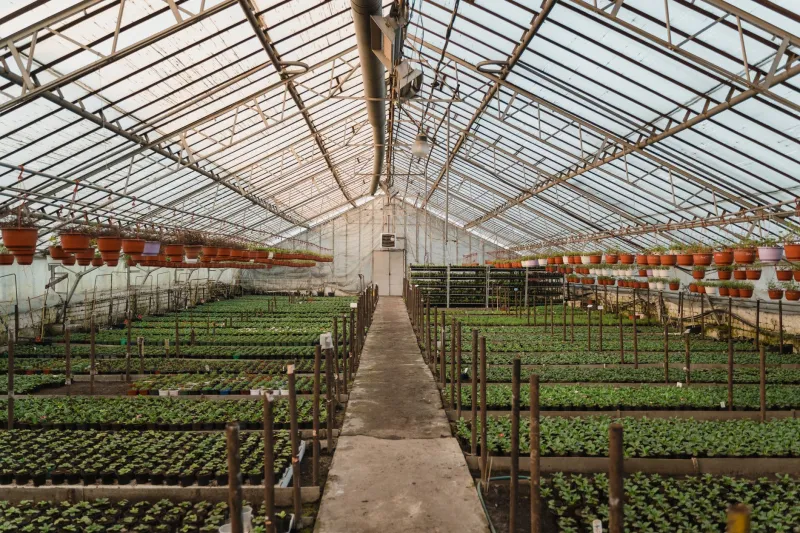
Walk into any real greenhouse and you'll notice something counterintuitive: the goal isn't maximum heat. It's regulated heat. Too much sun and the seedlings wilt. Too little light and they stretch pale and weak toward a window that never quite delivers. The growers who succeed aren't the ones who care the most — they're the ones who monitor the conditions constantly and make small adjustments.
Founders could take a page from that book. Most of us operate on one of two broken settings: full blast or lights out. And both will kill a young company, just slowly enough that you don't notice until it's too late.
The Two Ways Early Companies Die
Death by heat. You know this founder. Maybe you are this founder. Fourteen-hour days, Slack notifications answered at midnight, weekends that stopped existing sometime last spring. The logic feels heroic — nobody outworks me — but overwork doesn't compound like capital does. It depletes. Decision quality erodes first, then relationships, then health. By the time you're snapping at your cofounder over a subject line, the damage is already in the root system.
Death by darkness. The quieter killer. This founder built something in isolation — maybe out of necessity, maybe out of pride — and now spends weeks without a single honest conversation about the business. No advisor check-ins. No peer founder coffee. No customer conversations that aren't sales calls. The company looks fine from the outside, but nothing is pollinating. Ideas aren't cross-breeding. Feedback isn't arriving.
Here's the uncomfortable truth: most founders oscillate between these two modes. We isolate to build, then panic-sprint to catch up, then isolate again to recover. It's a climate system designed to fail.
A Quick Diagnostic: Read Your Climate
Grab a coffee and honestly answer these five questions:
- When did you last leave your desk before 6 p.m. on a non-holiday? If you can't remember, you're running hot.
- Can you name three people outside your company who know what you're working on right now? If not, you're in the dark.
- Do your evenings have a hard stop, even a soft one? Or does work expand to fill every container?
- When did a stranger last challenge your core business assumption? Not a customer being polite — a genuine challenge.
- If your cofounder (or spouse, or best friend) described your current pace, would they use the word "sustainable"?
Two or more troubling answers means it's time to adjust the vents. Not overhaul your life — just crack a window.
Three Routines That Actually Work
We asked early-stage founders in our mentorship network how they regulate their climate. None of them run perfect systems. All of them run deliberate ones.
The 90-Minute Deep Block (Marcus, seed-stage fintech, Austin). Marcus protects one 90-minute block every morning for the single hardest problem on his plate — no email, no Slack, phone in a drawer. Everything else in his day can be chaotic because that block never moves. "It's the one hour of the day where I'm a gardener, not a firefighter," he told us.
The Weekly Canopy Check (Priya, pre-seed consumer app, Chicago). Every Friday at 3 p.m., Priya has a 30-minute call with a founder friend from a different industry. No agenda, no updates-for-updates' sake — just two people pressure-testing ideas. It costs her two hours a month and has generated three of her best product decisions. It also guarantees she never goes more than a week in the dark.
The Hard Shutdown Ritual (Devon, bootstrapped SaaS, Denver). Devon's laptop closes at 6:30 p.m., and he writes tomorrow's top three priorities before shutting down — a trick that keeps his brain from running the business all night. "The shutdown list is what lets me actually stop," he says. "My brain trusts that nothing will be lost."
Notice what these have in common: none of them require more hours. They require boundaries around the hours that exist.
Build Your Thermostat, Not Your Furnace
The instinct when a startup struggles is to add heat — more hours, more hustle, more output. But a greenhouse operator facing a wilting crop doesn't crank the temperature. They check the conditions. Is it light? Water? Airflow?
Your startup is the same. When things feel stuck, the answer usually isn't intensity. It's regulation: protected focus, regular exposure to outside air, and a hard stop that lets the roots do their work overnight.
Design your days like a grower, not a furnace operator. The plants — and the company — will thank you.